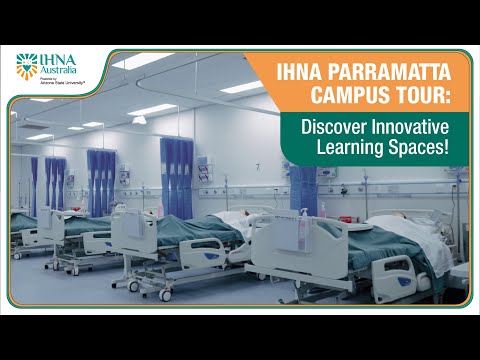
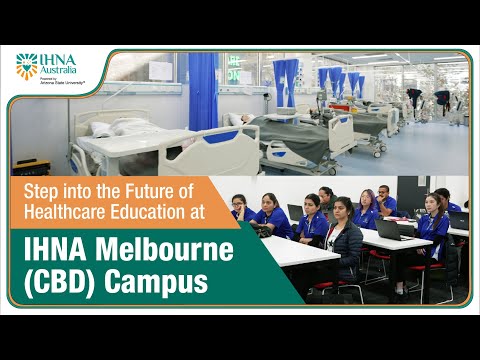
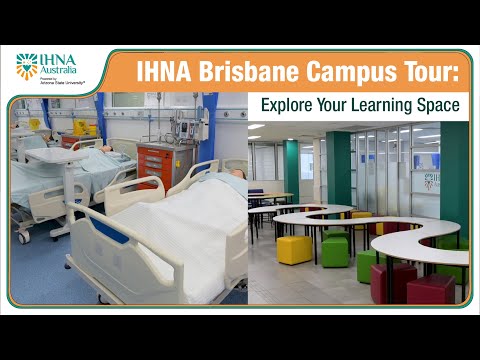
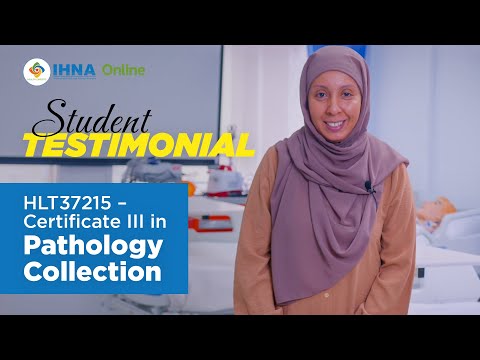
Face-to-Face Study:
Learn through structured on-campus classes, trainer-led activities and practical
training.
35 Hours of Professional Experience Placement:
Apply your learning in a real pathology collection environment through PEP organised
by IHNA.
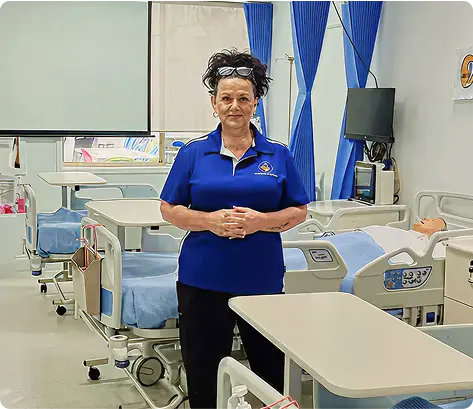
Hands-On Simulation Learning:
Practise pathology collection procedures and demonstrate practical skills in
simulated healthcare environments.
Practical Pathology Collection Skills:
Develop skills in venous blood collection, other specimen collection, specimen
preparation, infection prevention and responding to clinical risks.
Total tuition cost for HLT37525 – Certificate III in Pathology
(Pathology Collection) is AUD $8,000 for international students.
*Speak to our team to know about
current
scholarships.
To know more about the IHNA Fees & Charges, click
here.
There are no formal training package prerequisites for this course.
However, applicants must complete a Pre-Training Review (PTR) and meet IHNA
admission requirements, including:
- Minimum age of 18 years
- Successful completion of Australian Year 10 or equivalent
- Language, literacy, numeracy and digital skills at ACSF exit
level 3 for
Reading, Writing, Oral Communication and Numeracy, and ACSF exit
level 4 for
Learning
- English language requirements for student visa purposes, such as
IELTS 6.0
overall (General or Academic) or an accepted equivalent, or
other approved
English study pathways as outlined by IHNA and the Department of
Home Affairs
Some applicants may be exempt from providing English
evidence where
eligible under the stated criteria.
The Certificate III in Pathology (Pathology Collection) is delivered
face to face for
international students.
The course combines classroom learning, practical and
simulation-based training,
assessment activities, self-directed learning through IHNA’s
Learning Management System
and Professional Experience Placement.
The course is delivered over 26 weeks, including a 2-week break.
The HLT37525 Certificate III in Pathology (Pathology Collection) is
made up of 14 units of competency, including 8 core units and 6 elective units.
- 8 core units
- 6 elective units
CORE UNITS
| CHCCOM005 |
Communicate and work in health or community services |
| BSBTEC201 |
Use business software applications |
| HLTINF006 |
Apply basic principles and practices of infection prevention and control
|
| HLTPAT011 |
Receive, prepare and dispatch pathology specimens |
| CHCDIV001 |
Work with diverse people |
| HLTWHS001 |
Participate in workplace health and safety |
| HLTAID011 |
Provide first aid |
| BSBMED301 |
Interpret and apply medical terminology appropriately |
ELECTIVES
| BSBOPS203 |
Deliver a service to customers |
| HLTPAT009 |
Collect pathology specimens other than blood |
| HLTPAT008 |
Identify and respond to clinical risks in pathology collection |
| HLTPAT014 |
Perform venous blood collection |
| HLTCAR004 |
Perform electrocardiography (ECG) |
| HLTAAP001 |
Recognise healthy body systems |
35 Hours of Professional Experience Placement.
Professional Experience Placement gives you the opportunity to apply the knowledge
and practical skills developed during your course in a real pathology collection
environment.
As part of the Certificate III in Pathology (Pathology Collection), you’ll complete
35 hours of PEP organised by IHNA.
Placement may take place in an approved pathology collection environment such as a
pathology collection centre, hospital or GP clinic. During placement, you’ll apply
relevant skills under workplace supervision as part of your course learning and
assessment.
Students must meet IHNA’s placement-readiness requirements before commencing PEP.
Learn more about Professional Experience Placement and requirements → Click here
There are no direct packaged pathways into this qualification. After
completing the course, students may choose to continue their studies in related
areas such as:
- Diploma of Nursing
- Bachelor of Nursing
These study options can support further career development in the
healthcare sector. Please note: IHNA may not offer all of the qualifications
listed above.
Graduates can pursue entry-level roles including:
- Pathology Specimen Collector
- Phlebotomist
- Pathology Aide
- Pathology Specimen Receptionist
These positions are available in hospitals, public health services,
private pathology collection centers, laboratories, medical centers, GP clinics,
community health centers, and specialist collection facilities.
IHNA offers the Certificate III in Pathology (Pathology Collection).
This course is suitable for those seeking a career as a pathology collector or
phlebotomist.
Pathology collectors play an important role in healthcare by collecting
samples from patients for tests. These include blood, urine, faeces, sputum, swabs,
and other samples depending on the test required. Their duties include explaining
procedures to patients, following infection control protocols, and collecting
samples with minimal discomfort. They are responsible for accurately handling,
labelling, and preparing samples for testing, recording patient and specimen
details, maintaining and cleaning equipment, and communicating with patients to
provide reassurance and address any concerns. Additionally, after receiving further
training, pathology collectors may perform Electrocardiograms (ECGs), manage Holter
monitors (portable devices for tracking heart rhythms), and conduct blood pressure
monitoring.
Already have relevant study, skills or experience?
You may be able to have some of your previous learning recognised toward your
Diploma of Nursing. Any recognition or credit is subject to assessment and
the requirements of the course.
If you already have relevant nursing or
healthcare skills and experience, you may be eligible to
apply for Recognition of Prior Learning
(RPL).
IHNA will assess the evidence you provide against the
requirements of the relevant units. RPL is not
automatic and eligibility will depend on your individual
experience and evidence.
Ask us about RPL → https://ihna.edu.au/rpl-and-credit-transfer/
If you have previously completed equivalent units
of competency at IHNA or another Registered Training
Organisation (RTO), you may be eligible for Credit
Transfer.
You’ll need to provide evidence of your previous study so
IHNA can confirm whether the completed units are equivalent
to units in the Diploma of Nursing.
Check your Credit Transfer eligibility → https://ihna.edu.au/rpl-and-credit-transfer/
- What is HLT37525 Certificate III in Pathology (Pathology Collection
Specialisation)?
It is an AQF Level 3 qualification designed for people who want
to develop the skills to collect, receive, prepare and dispatch pathology
specimens and perform routine pathology procedures under general
supervision.
- How long is the course?
The course runs for 26 weeks, including a 2-week
break.
- How many units are in the course?
The qualification consists of 14 units of competency,
including 8 core units and 6 elective units.
- Is placement included in the course?
Yes. Students must complete a 35-hour Professional
Experience Placement (PEP) in an approved pathology collection
setting.
- Who organises the Professional Experience Placement?
IHNA organises the placement and supports students through
readiness checks and required documentation before placement begins.
- How is the course delivered?
For domestic students, the course is delivered in blended mode.
For international students, the course is delivered face-to-face. Both
include simulation-based learning, self-study and placement.
- How is the course assessed?
Assessment includes knowledge-based tasks, theory assessments,
simulation-based assessments and workplace-based placement assessment where
required.
- Can I apply for Recognition of Prior Learning or Credit Transfer?
Yes. Eligible students may apply for Recognition of Prior
Learning (RPL) or Credit Transfer (CT) in line with IHNA
policies and procedures.
- What jobs can this course lead to?
Possible career outcomes include Pathology Specimen Collector,
Phlebotomist, Pathology Aide and Pathology Specimen Receptionist.
- What support does IHNA provide to students?
IHNA provides support services including LLN support,
additional tutorials, IT support, wellbeing services and reasonable
adjustment where needed.