April 17, 2026 / Individual Support
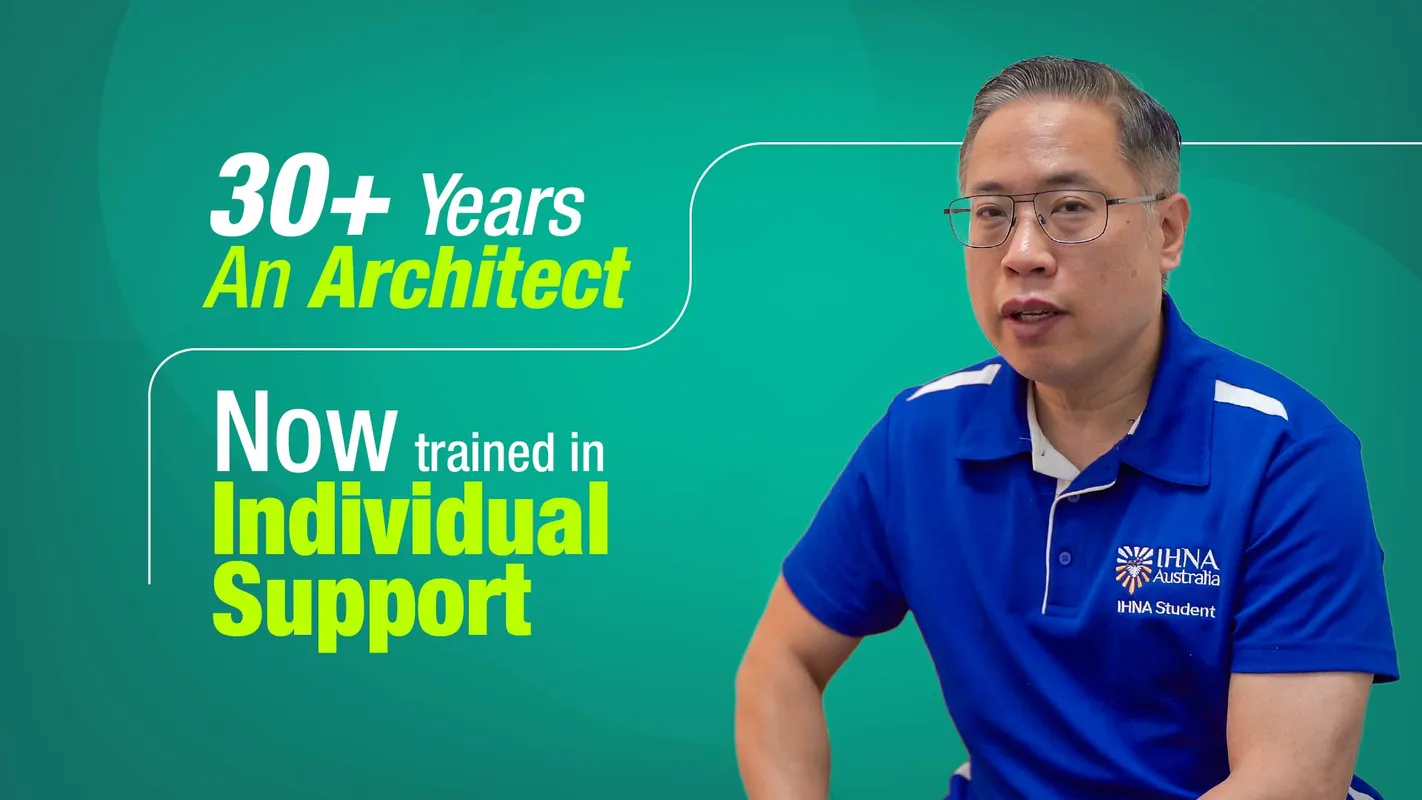
From Architecture to Aged Care: William's Journey into Individual Support with IHNA
Career changes are rarely simple. But sometimes, they reveal something deeper about who you are and how you want to contribute to the world.
For William, the decision to study the Certificate III in Individual Support with IHNA was not about taking a step back. It was about stepping closer to purpose.
With more than 30 years of experience as an architect, William already had an established professional life. He is also a husband, a father of two and a carer for his 80-year-old mother. But after seeing care up close in his own family, he felt called to contribute to the community more directly and humanely.
Why William chose a career in Individual Support
William's turning point came when his mother was admitted to the hospital for a major operation. Watching the medical team care for her left a real impact on him.
He reflected on how fortunate his family was to have access to compassionate healthcare in Australia. That experience sparked a new thought: he wanted to give back in a more personal, immediate way.
That shift matters because it shows something many mature-age students feel but do not always say out loud. Sometimes, success in one profession does not stop you from wanting to do work that feels more directly meaningful.
"It wasn't a step back"
One of the strongest parts of William's story is how clearly he reframes career change.
When asked why he would move from architecture into individual support, he did not see it as a step backwards at all. Instead, he described it as a way to diversify his professional life, balance practical skills with human care, and become more resilient in a rapidly changing world.
That perspective makes this story powerful for anyone considering an aged care course or support worker course in Australia later in life. It is not about abandoning your past. It is about expanding who you are and where your skills can take you.
The real moment that confirmed his decision
There was one moment in particular that made the value of his training feel very real.
After beginning his studies, William was in a park when he saw an older adult fall to the ground. While others nearby panicked, he stepped in calmly, helped the person up, guided them to a bench, held their hand and comforted them. In that moment, he realised the importance of responding with care and confidence.
It is a simple story, but it says a lot.
Studying Certificate III in Individual Support is not just about completing units. It is about being prepared to show up when someone needs help — at work, at home or even unexpectedly in everyday life.
Why IHNA stood out
Before enrolling, William did what many thoughtful students do: he carefully researched his options.
He says IHNA stood out for its reputation in healthcare education, its practical teaching approach, and its nurturing of students. That combination mattered to him. He was not just looking for a provider. He was looking for a place where the learning would feel useful, supportive and grounded in the real demands of care work.
For prospective students, especially those balancing work and family responsibilities, that is a big deal. A good course is not only about content. It is also about whether the teaching style fits your life and helps you apply what you learn with confidence.
How blended learning made study possible
For William, one of the best parts of the course was the blended learning model.
As a full-time worker, he needed a study option that would fit around his daily responsibilities. The combination of online learning and on-campus practical sessions gave him exactly that. It allowed him to manage theory at his own pace while still gaining the hands-on experience essential to the field of individual support.
That balance helped him keep work, study and family life moving at the same time.
For students who may be wondering whether they can realistically return to study while managing real-world responsibilities, his story is a strong reminder that flexibility can make the journey achievable.
Trainers who brought the work to life
William speaks warmly about the trainers who guided him through the course. He describes them as experienced, knowledgeable and inspiring, and he particularly values how they taught by example.
One moment that stayed with him came during a practical class held in a real aged care facility. There, the trainer physically demonstrated how to care for an older adult, including feeding, washing and hands-on support. That practical demonstration helped turn theory into something real and memorable.
That point is worth underlining because it captures what students often need most in healthcare education: not just notes and slides, but role models who can show what good care actually looks like.
What the course taught him about caring for people
Before starting the course, William admits he had been oversimplifying the skills required to care for people with care needs.
After studying, he realised individual support is a highly diverse field that requires more than goodwill. It requires training, presence, person-centred care and an understanding that every individual has different needs.
That is a valuable message for anyone thinking this career is "easy" or straightforward. Good support work requires empathy, patience, practical skills, and the ability to see each person as a whole individual.
Why Individual Support matters more than ever
William also speaks to the bigger picture.
With Australia's ageing population, he sees compassionate and skilled support workers as more important than ever. That is one reason the Certificate III in Individual Support continues to matter so much — it prepares students for work that has real social value and growing demand.
For the right person, this is not just a qualification. It is an entry point into meaningful work that supports older Australians and strengthens the care sector as a whole.
His honest advice for future students
When asked what advice he would give someone considering this course, William keeps it simple:
Come with an open heart.
He also does not pretend it is effortless. He is honest that the course can be challenging, but he is equally clear that it is deeply rewarding.
That honesty makes the story feel real. It is not about pretending the journey is easy. It is about showing that the challenge is worth it.
Architecture gave him structure. Support work gave him purpose.
One of William's best lines captures his journey perfectly:
Architecture gave him structure, but being a support worker gave him purpose.
That is the emotional core of this story. He is not replacing one identity with another. He is bringing both together. His professional experience, family responsibilities and training in individual support now shape a fuller version of who he is and how he wants to contribute.
Ready to start your own Individual Support journey?
William's story is proof that it is never too late to move toward work that feels meaningful.
Whether you are changing careers, returning to study, or looking for a more people-focused future, the Certificate III in Individual Support can be a practical first step into the healthcare sector.
At IHNA, students benefit from:
- practical, hands-on learning
- flexible blended study options
- industry-informed trainers
- a supportive learning environment
- training that prepares you for real-life care work
If you are thinking about building a future in aged care or community support, this could be where your journey begins.
Ready to explore your options?
Connect with IHNA to learn more about the Certificate III in Individual Support and take the next step toward a rewarding career in care.